
In the H100 era, a single GPU consumed around 700W (SXM version), and traditional FR-4 could still cope. By the Rubin Ultra generation, industry projections place a single GPU's power draw at around 2300W; analyses of a Max-P version predict up to 2600–2800W, with even longer-term discussions of 3500W. Regardless of which figure is used, the thermal conductivity of traditional organic substrates is only 0.3–0.4 W/(m·K) (approximately 0.3 in the Z-axis), which simply cannot dissipate heat adequately to control chip junction temperature.
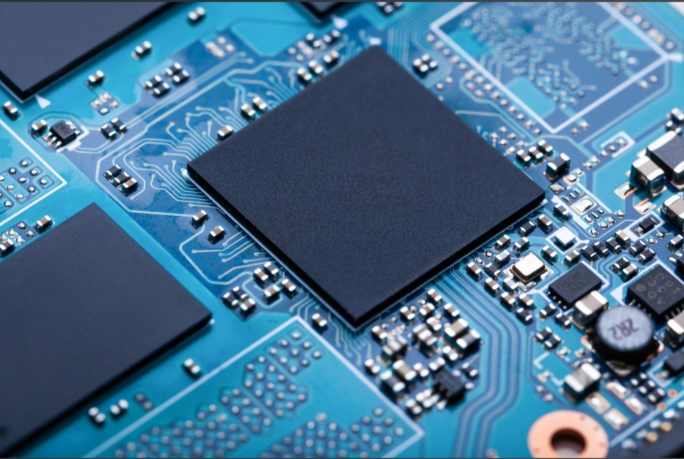
The bigger problem is not just "heat," but three bottlenecks:
First, warpage — the in-plane (X/Y axis) CTE of organic substrates is about 14–17 ppm/°C, while the Z-axis CTE reaches as high as 45–70 ppm/°C. Silicon chips have a CTE of about 3.2–3.5 ppm/°C. Under thermal cycling, this mismatch causes solder joint fatigue and layer delamination. Warpage control in ultra-large-size packaging has become one of the industry's most pressing challenges.
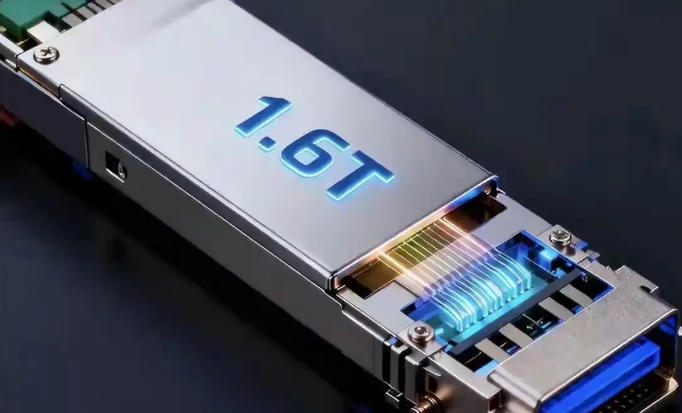
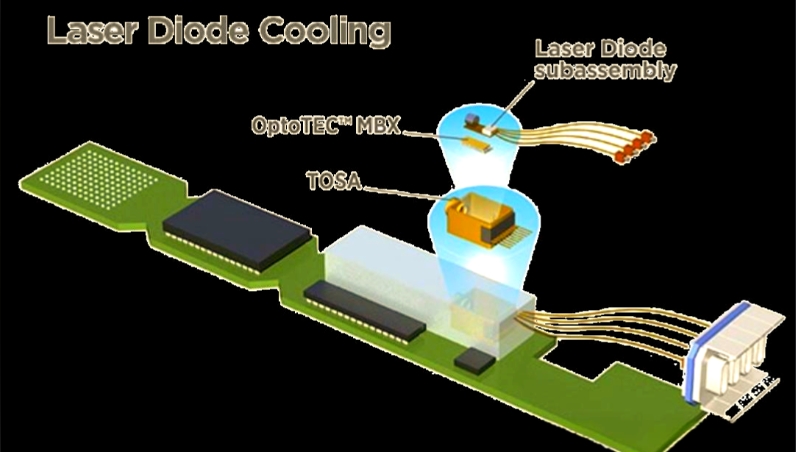
Second, signal integrity — 1.6T / 3.2T and CPO are pushing dielectric loss to the limit. Currently, one of the mainstream solutions for 1.6T/CPO high-speed substrates is ceramic-filled PTFE copper-clad laminates (such as Rogers RO1200™, with Df as low as 0.0017). In optical modules, the role of aluminum nitride is more as a package housing or package base, rather than as the PCB substrate for high-speed signal transmission. As aluminum nitride optical module ceramic components, they provide both thermal dissipation and insulation, complementing high-speed copper-clad laminate solutions. In TEC thermal control within optical modules, aluminum nitride TEC ceramic substrates offer high thermal conductivity and electrical insulation for substrate support. More broadly, ceramic electronic substrates are extending from power devices and RF packaging into AI computing packaging, becoming a critical carrier in the trend toward "de-organicization."
Third, the heat-dissipation base — no matter how powerful liquid cooling is, it cannot fix the "bottleneck" between the chip and its base. The first step of heat extraction from the chip depends on the base material closest to the junction. This is where aluminum nitride ceramic substrates are being reconsidered: they offer thermal conductivity of 170–230 W/(m·K) (MARUWA's product catalog lists three grades: AN-170, AN-200, and AN-230), excellent insulation, and a CTE of approximately 4.5–4.6 ppm/°C. High thermal conductivity AlN addresses heat dissipation, AlN CTE addresses warpage, and the AlN dielectric constant (approximately 8.0–9.2) and low dielectric loss (3–7×10⁻⁴) together provide low-loss advantages in high-frequency scenarios. For advanced packaging, aluminum nitride advanced packaging materials are not an "upgrade option," but a necessity dictated by material physics.
Xiamen Juci manufactures High Purity AlN Powder , AlN Granule, Thermal Conductive Filler and AlN Ceramics . Please contact us if you have any requirements.
Contact: Jenny Qin / 진현혜
Phone: +86 151-5177-8700
Wechat ID: JENNY-8866
Xiamen Juci Technology Co., Ltd.
Email: qinxianhui@chinajuci.com
Website: www.jucialnglobal.com
WhatsApp : +8618250812806
WhatsApp : wechat: JENNY-8866
电子邮件 : chenxiaofang@chinajuci.com
电子邮件 : qinxianhui@chinajuci.com
电话 : +8618250812806
电话 : +8615151778700